Integrating International Women's Day Illustration into Your Creative Workflow
In the fast-paced world of digital content creation, visual assets are rarely just decorative elements; they are strategic tools that communicate values, set tones, and engage audiences instantly. When planning campaigns around significant global events, the selection of imagery becomes a critical decision point in your project lifecycle. Specifically, incorporating an International Women's Day illustration requires more than simply picking a colorful image. It demands a thoughtful approach to how that asset fits into your broader design process, from initial concept to final deployment across various platforms.
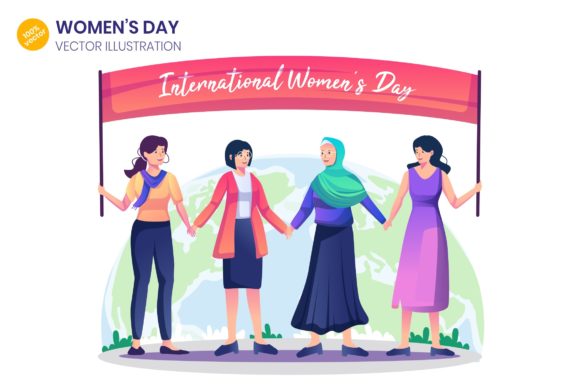
The modern creative workflow often involves tight deadlines and high expectations for quality. Professionals ranging from marketers and educators to freelance designers need assets that are not only visually compelling but also technically robust. A concept design featuring happy, diverse women standing together, holding hands, and symbolizing the struggle for freedom, independence, and equality serves as a powerful narrative device. However, the true value of such an asset lies in its adaptability. Whether you are building a landing page, designing a mobile web interface, or creating an infographic, the underlying file structure determines how smoothly the integration process goes.
The Strategic Role of Vector Assets in Project Planning
Before diving into the execution phase of any campaign, preparation is key. This involves selecting resources that align with your technical requirements and brand guidelines. When you choose a flat style vector illustration for International Women's Day, you are making a decision that impacts the efficiency of your entire workflow. Unlike raster images, which are composed of pixels and can lose clarity when enlarged, vector graphics are mathematical paths. This means every element in the design is 100% vector, allowing it to be resized to any dimension without losing quality.
This scalability is crucial for professionals who need to deploy a single concept across multiple touchpoints. Imagine a scenario where a small business owner needs a hero image for their website homepage, a banner for a social media post, and a printed flyer for a local event. Using a raster image would require sourcing three different files or risking pixelation on the print material. With a fully editable vector source file, the same asset scales seamlessly from a mobile screen to a billboard. This eliminates the need for redundant asset creation, saving time and ensuring visual consistency across all channels.
Furthermore, the concept of diversity and unity depicted in these illustrations—women of different backgrounds holding hands—resonates deeply with contemporary audiences. Integrating this message effectively requires an asset that can be customized to fit specific brand colors while retaining its core emotional impact. The ability to edit colors directly within the file allows creators to maintain brand identity without commissioning custom artwork from scratch. This balance between ready-made convenience and custom flexibility is what makes high-quality vector illustrations indispensable in modern workflows.
Technical Compatibility and File Management
A smooth implementation process relies heavily on file compatibility. In a professional environment, designers and developers use a variety of tools to bring projects to life. A versatile illustration package should support this ecosystem by providing files in multiple formats. For instance, having access to an Adobe Illustrator (.Ai) source file is essential for deep customization. This format allows designers to ungroup elements, modify shapes, and adjust color palettes with precision. It is the foundation for any heavy lifting required during the design phase.
However, the workflow does not stop at the design software. Collaboration often involves handing off assets to developers or using them in prototyping tools. Including an Adobe XD (.xd) file bridges the gap between static design and interactive prototyping. This is particularly useful for UX/UI designers working on mobile web applications or landing pages where the illustration needs to interact with user interface elements. The presence of EPS10 and SVG formats ensures compatibility with a wider range of vector editors and web development environments. SVGs, in particular, are vital for responsive web design, as they remain crisp on high-resolution displays and can be styled via CSS.
For non-designers or those needing quick deployment, high-resolution raster exports like PNG 300 DPI and JPG 300 DPI are invaluable. These files are ready to use in presentation software, word processors, or content management systems where vector editing is not possible. By providing this comprehensive suite of file types, the asset supports every stage of the project, from the initial brainstorming session to the final publication. It removes friction points that often occur when file formats do not match the tool being used, thereby enhancing overall productivity.
Implementing the Design Across Different Mediums
Once the technical groundwork is laid, the focus shifts to practical application. How does one effectively utilize an International Women's Day concept design in real-world scenarios? The answer lies in understanding the context of each medium. For a landing page, the illustration can serve as the primary hero image. Its flat style ensures fast loading times, which is a critical factor for SEO and user retention. The clear lines and vibrant colors draw the eye immediately, communicating the theme of equality and empowerment before the user even reads the headline.
In the realm of infographics, the modularity of vector elements becomes a significant advantage. Since all elements are editable, a creator can isolate specific figures or symbols from the main composition to highlight statistics about gender equality or women's achievements. This level of granularity allows for the creation of custom data visualizations that feel cohesive with the overall campaign theme. Educators and publishers can leverage this to create engaging learning materials that are both informative and visually stimulating.
Mobile web design presents unique challenges regarding screen real estate. A complex illustration might clutter a small screen, but a well-structured flat vector design can be simplified or cropped without losing its essence. Developers can use the SVG version to animate certain parts of the illustration, such as having the held hands gently move or the background colors shift, adding an layer of interactivity that enhances user engagement. This dynamic use of static assets transforms a simple image into an interactive experience, demonstrating how thoughtful asset selection can elevate the final product.
Maintaining Quality and Consistency
Long-term use of design assets requires a commitment to quality control. When an illustration is described as "easy to use and customize," it implies a clean underlying structure. Professional vector files should have organized layers, logical grouping, and named elements. This organization is not just a courtesy; it is a necessity for efficient workflow. When a marketer needs to update a campaign six months later, or a new team member takes over a project, a well-organized file reduces the learning curve and prevents errors.
Consistency is another pillar of successful branding. Using the same illustration style across web graphics, banners, and printed materials creates a unified visual language. This reinforces the message of the campaign and builds recognition among the audience. The flat style, characterized by its simplicity and lack of unnecessary gradients or textures, is particularly effective for maintaining this consistency. It translates well across different mediums and printing techniques, ensuring that the message of freedom and independence remains clear regardless of where it is viewed.
Moreover, the ethical dimension of using diverse imagery cannot be overstated. In a globalized market, representing a wide spectrum of women is not just a trend; it is a responsibility. By choosing an illustration that explicitly depicts diversity and unity, organizations signal their commitment to inclusive values. This alignment between visual content and corporate ethos strengthens trust with the audience. It shows that the entity understands the nuances of the occasion and respects the gravity of the themes being celebrated.
Optimizing Your Creative Process
To fully leverage the potential of these design assets, it is helpful to adopt a process-oriented mindset. Start by auditing your current project needs. Identify where visual storytelling can enhance your message. If you are planning a campaign for International Women's Day, secure your assets early in the planning phase. Download the full package containing all necessary file formats to avoid last-minute scrambling.
Next, integrate the asset into your design system. If you have brand guidelines, test the illustration's color palette against your brand colors. Use the Adobe Illustrator source file to make necessary adjustments, ensuring the final output feels native to your brand while honoring the original artistic intent. For web projects, optimize the SVG files to reduce file size further without compromising quality, ensuring optimal performance on slower connections.
Finally, consider the longevity of the asset. While tied to a specific day, the themes of equality, independence, and community are evergreen. A high-quality vector illustration can be repurposed for year-round content related to women's leadership, diversity initiatives, or community building. This approach maximizes the return on investment for the asset, turning a single purchase into a long-term resource for your creative library.
In conclusion, the integration of a professional International Women's Day illustration is a strategic move that enhances both the aesthetic and functional aspects of your projects. By prioritizing vector quality, file versatility, and thematic relevance, creators and businesses can execute campaigns that are not only visually stunning but also operationally efficient. The result is a seamless workflow that empowers teams to focus on what matters most: delivering a powerful message of unity and progress to the world.