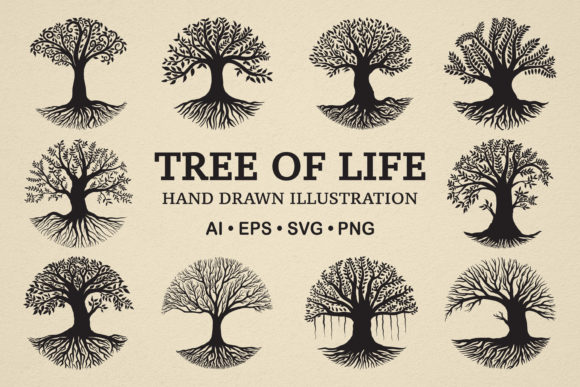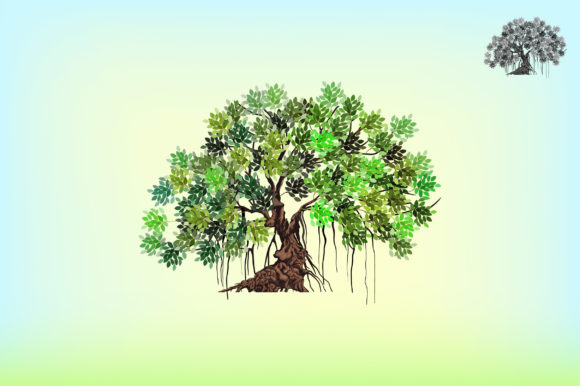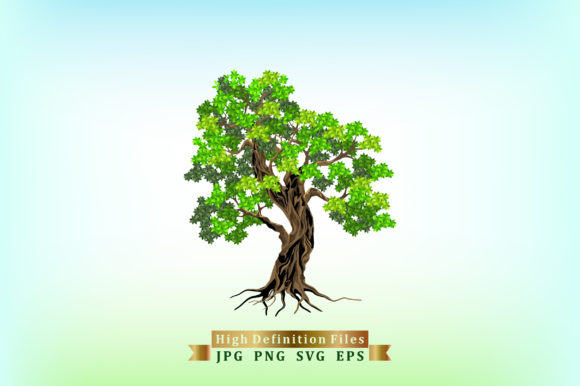
Unlocking Professional Branding with Premium Oak Tree Logo Vector Art
There is a distinct sense of stability and growth that an oak tree brings to a visual identity. Whether you are launching a new landscaping business, creating a family crest, or designing merchandise for an outdoor adventure blog, the imagery of a sturdy oak resonates deeply with audiences. However, the journey from finding an image to having a professional, usable asset is often where many creators stumble. The difference between a pixelated mess and a crisp, scalable brand mark usually comes down to one critical factor: the file format. This is where Oak Tree Logo Vector Art becomes not just a nice-to-have, but an essential investment for your project.
When you search for design assets, it is easy to be misled by low-resolution previews that look perfect on a screen but fall apart the moment you try to print them. Many beginners and even seasoned entrepreneurs make the mistake of downloading standard JPEGs or PNGs from free stock sites, assuming they can simply resize them for a billboard or a t-shirt. This is a fundamental misunderstanding of how digital graphics work. Raster images (like JPGs) are made of pixels; when you enlarge them, those pixels stretch, resulting in a blurry, unprofessional appearance. In contrast, oak tree logo vector art is built on mathematical paths. This means you can scale the design from the size of a business card to the side of a building without losing a single ounce of quality.
The Hidden Costs of Choosing the Wrong File Format
One of the most common pitfalls in DIY design is underestimating the importance of editability. You might find a beautiful oak tree illustration that seems perfect for your needs, but if it is delivered only as a flattened image, you are stuck with it exactly as is. What happens if your brand colors change next year? Or if you need to remove the background to place the tree over a textured photo? With a raster file, these tasks are difficult, time-consuming, and often yield poor results.
By opting for a comprehensive vector package, you avoid these headaches entirely. A high-quality download should include EPS10 and SVG files. These formats allow you to open the artwork in software like Adobe Illustrator, CorelDRAW, or even free alternatives like Inkscape. Once opened, every leaf, branch, and root becomes an editable object. You can change the color of the foliage to match your specific hex code, simplify the details for embroidery, or separate elements to create unique patterns. Ignoring this level of flexibility often leads to designers having to recreate logos from scratch, wasting both time and money.
Why Versatility Matters for Modern Creators
In today's multi-platform world, your logo needs to work everywhere. It needs to look sharp on a retina display smartphone, print clearly on a matte flyer, and cut cleanly on a vinyl cutter for a shop window sign. A frequent oversight is purchasing assets that are "web-ready" but not "print-ready." Web graphics typically rely on RGB color modes and lower resolutions, while professional printing requires CMYK color modes and high-density vectors.
When you utilize a complete set of oak tree logo vector art, you are future-proofing your brand. The inclusion of various file types ensures you are prepared for any scenario:
- JPG files are excellent for quick previews, social media posts, or documents where editing isn't required.
- PNG files offer transparency, making them ideal for overlaying your oak tree icon onto website headers or video thumbnails without a white box around it.
- SVG files are the gold standard for web development, ensuring your logo loads quickly and stays crisp on all devices.
- EPS10 files provide the highest level of compatibility with professional printing presses and cutting machines.
Failing to check for this variety before downloading can limit your creative output. Imagine designing a fantastic t-shirt line only to realize the graphic looks jagged when printed on fabric because the source file wasn't a true vector. These are the kinds of costly errors that a little due diligence can prevent.
Evaluating Quality Before You Download
Not all vector files are created equal. Some designers sell "vectors" that are actually just high-resolution raster images traced automatically by software, resulting in messy anchor points and unnatural curves. When evaluating oak tree logo vector art for your next project, look for signs of hand-crafted precision. The lines should be smooth, and the composition should be balanced. A well-designed vector will have a logical structure, with grouped elements that make sense (e.g., all leaves in one group, the trunk in another).
Another aspect often overlooked is the versatility of the design itself. Is the oak tree too detailed? While intricate designs look great on a large poster, they can become a muddy blob when shrunk down for a favicon or a social media profile picture. The best vector sets offer variations or clean enough lines that they remain recognizable at small scales. If you are planning to use the art for embroidery or laser cutting, simplicity is key. Complex gradients and tiny details often do not translate well to physical crafts. A good vector template allows you to toggle these details on or off depending on your medium.
Maximizing Your Design Potential
Once you have secured a high-quality vector set, the possibilities for application are nearly endless. Beyond the obvious logo usage, consider how these elements can enhance other areas of your business or hobby. For educators, an oak tree illustration can bring life to biology worksheets or history presentations about heritage and strength. Bloggers can use the icons as bullet points or section dividers to create a cohesive visual theme throughout their articles.
For the crafty entrepreneur, these files are a goldmine for DIY projects. Because the files are resizable without quality loss, you can adapt the same oak tree design for a variety of products. Use the SVG file to cut vinyl decals for water bottles, import the EPS into a heat press software for custom apparel, or utilize the PNG for sublimation printing on mugs. The ability to manipulate the colors means you can create seasonal variations—perhaps a green oak for spring and a golden-brown version for autumn—without needing to buy new assets.
Ultimately, the goal is to work smarter, not harder. By starting with the right foundation—professional, editable, and versatile Oak Tree Logo Vector Art—you eliminate the friction that often slows down creative projects. You avoid the frustration of pixelation, the cost of re-designing, and the limitation of static images. Whether you are a freelancer building a portfolio, a small business owner establishing a brand, or a hobbyist creating gifts for loved ones, investing in the correct file formats pays dividends in quality and peace of mind. Take the time to choose wisely, check the file specifications, and unlock the full potential of your design vision.