Evaluating Isometric Digital Marketing Illustration for Modern Web Design
In the rapidly evolving landscape of digital marketing, visual communication has become just as critical as the data it represents. Marketers, designers, and business owners are constantly seeking ways to simplify complex strategies into digestible, engaging visuals. This is where the Isometric Digital Marketing Illustration concept gains significant traction. By combining the technical precision of isometric projection with relatable business scenarios, this design approach offers a unique solution for presenting digital marketing concepts.
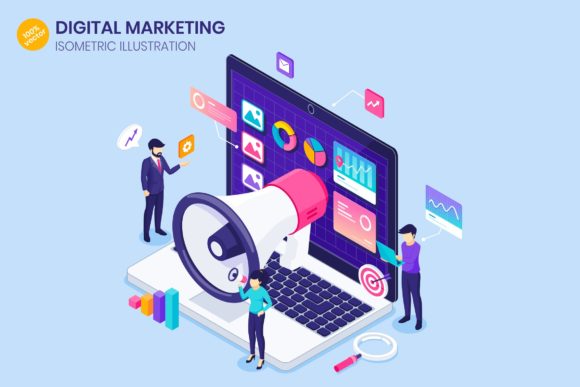
The core of this asset features business people characters working in proximity to a giant laptop, surrounded by graph charts and diagrams. It visually encapsulates the process of planning business strategy, making abstract ideas tangible. For professionals looking to elevate their web graphics, landing pages, or infographics, understanding the utility and flexibility of such vector illustrations is essential. This article explores the practical applications, technical advantages, and strategic value of integrating isometric design into your digital marketing toolkit.
The Strategic Value of Isometric Design in Marketing
Isometric illustration is not merely a stylistic choice; it is a functional tool for clarity. Unlike perspective drawings that vanish into a horizon line, isometric projections maintain parallel lines, ensuring that every element remains visible and measurable. When applied to digital marketing concepts, this style allows designers to layer multiple components—such as analytics, team collaboration, and technology infrastructure—without visual clutter.
The specific composition of business characters working near a giant laptop serves a dual purpose. First, it humanizes the technology. Digital marketing can often feel cold or overly technical. By introducing character elements, the illustration creates an emotional connection, suggesting teamwork, effort, and strategic planning. Second, the oversized laptop acts as a central anchor, drawing the viewer’s eye to the primary tool of the trade while the surrounding charts and diagrams provide context for the results being achieved.
For marketers and entrepreneurs, this visual narrative is powerful. It communicates that success in digital marketing is not accidental but the result of deliberate planning and analysis. Whether used in a pitch deck, a website hero section, or an educational blog post, the image reinforces the message of professionalism and data-driven decision-making.
Technical Flexibility and Vector Superiority
One of the most compelling aspects of high-quality digital assets is their technical foundation. The Isometric Digital Marketing Illustration discussed here is built entirely on vector graphics. For those unfamiliar with the distinction, vector files use mathematical equations to define shapes, rather than pixels. This fundamental difference offers several critical advantages for professional use.
First, scalability is unlimited. Whether you need a tiny icon for a mobile navigation menu or a massive backdrop for a conference banner, the image retains its crisp edges and smooth curves. There is no pixelation, blurring, or loss of quality regardless of the size. This is particularly important in responsive web design, where images must adapt to various screen densities, from standard desktop monitors to high-resolution Retina displays.
Second, editability is paramount for brand consistency. Most businesses operate within strict brand guidelines that dictate specific color palettes. A raster image (like a standard JPEG) is difficult to modify without advanced photo editing skills. In contrast, this vector illustration allows for easy color customization. You can adjust the hues of the characters’ clothing, the laptop, or the background elements to match your corporate identity seamlessly. This level of control ensures that the illustration feels like a native part of your brand rather than a generic stock image.
Comprehensive File Formats for Modern Workflows
Modern design workflows are diverse, involving various software platforms and collaboration tools. A versatile asset must accommodate these differences. This illustration package includes a comprehensive range of file formats, ensuring compatibility across different stages of production.
- Adobe Illustrator (.Ai): The industry standard for vector editing, allowing full manipulation of paths, anchors, and layers.
- Adobe XD (.xd) and Figma (.fig): Essential for UI/UX designers who are building interactive prototypes or designing web interfaces directly in these platforms.
- EPS10 and SVG: Ideal for web developers. SVGs are lightweight, code-based vectors that render perfectly in browsers and can be animated via CSS or JavaScript.
- PDF: Useful for print materials and easy sharing with clients who may not have design software.
- PNG and JPG (300 DPI): High-resolution raster exports for immediate use in presentations, social media, or documents where editing is not required.
The inclusion of both source files and ready-to-use exports streamlines the production process. A freelancer can quickly drop a PNG into a client mockup, while a senior designer can open the .Ai file to tweak specific details. This flexibility reduces friction in collaborative environments and accelerates project timelines.
Practical Applications Across Digital Channels
The versatility of the Isometric Digital Marketing Illustration extends beyond simple decoration. It serves functional roles across various digital touchpoints. Understanding where and how to deploy this asset can maximize its impact.
Landing Pages and Hero Images
The top section of a landing page, known as the hero section, is crucial for capturing attention. An isometric illustration featuring a giant laptop and analytics charts provides a strong visual hook. It immediately signals to the visitor that the page is about digital strategy, growth, or marketing services. Because the style is clean and modern, it does not distract from the call-to-action but rather supports it by establishing credibility.
Infographics and Educational Content
Explaining complex marketing funnels or SEO strategies can be challenging. Isometric elements can be deconstructed and used as icons or components within an infographic. For example, the graph charts from the main illustration can be isolated to represent data analysis, while the characters can illustrate user personas. This modular approach allows content creators to build custom visuals that enhance comprehension.
Presentation Decks and Proposals
For agencies and consultants, visual appeal in proposals can influence client perception. Using a cohesive isometric theme throughout a pitch deck creates a polished, professional look. The illustration’s focus on planning and strategy aligns perfectly with slides discussing roadmap development, KPI tracking, or campaign optimization.
Who Benefits Most from This Asset?
While the aesthetic appeal is broad, certain professionals will find disproportionate value in this specific type of illustration.
Digital Marketing Agencies: Agencies often need to produce high volumes of content quickly. Having a customizable, high-quality base illustration allows them to maintain visual consistency across client projects while reducing design time.
SaaS and Tech Startups: Companies selling software solutions benefit from imagery that depicts people interacting with technology. The isometric style is prevalent in the tech industry because it conveys innovation and structure.
Educators and Course Creators: Those teaching digital marketing skills need visuals that break down abstract concepts. The clear, diagrammatic nature of isometric art makes it an excellent teaching aid.
Freelance Designers: For designers working with limited budgets, purchasing a comprehensive vector pack is more cost-effective than creating custom illustrations from scratch for every project. It provides a professional foundation that can be adapted to meet specific client needs.
Considerations for Effective Implementation
While the Isometric Digital Marketing Illustration offers numerous advantages, effective use requires thoughtful implementation. One common pitfall is overuse. Isometric designs are detailed; using too many complex illustrations on a single page can overwhelm the user. It is best used as a focal point, supported by ample white space and clear typography.
Additionally, color harmony is crucial. While the ability to edit colors is a strength, it requires a good eye for design. Ensure that the adjusted palette maintains sufficient contrast for accessibility standards. Text placed over or near the illustration should remain legible, and interactive elements should not be obscured by complex graphic details.
Finally, consider the context of your audience. While isometric art is widely accepted in tech and business sectors, it may feel too stylized for industries that prioritize hyper-realism or traditional photography. Always align the visual style with your brand voice and audience expectations.
Long-Term Value and Conclusion
Investing in high-quality, editable vector assets like the Isometric Digital Marketing Illustration is a strategic decision for any digital professional. The combination of aesthetic appeal, technical flexibility, and broad applicability makes it a valuable resource. It bridges the gap between complex data and human engagement, offering a visual language that is both professional and accessible.
By leveraging the scalability of vector formats and the modularity of the design elements, users can create consistent, high-impact visuals across web, mobile, and print media. Whether you are refining a landing page, crafting an infographic, or pitching a new strategy, this illustration provides a robust foundation for communicating digital marketing concepts effectively. In a digital world where attention is scarce, clarity and quality are not just advantages—they are necessities.